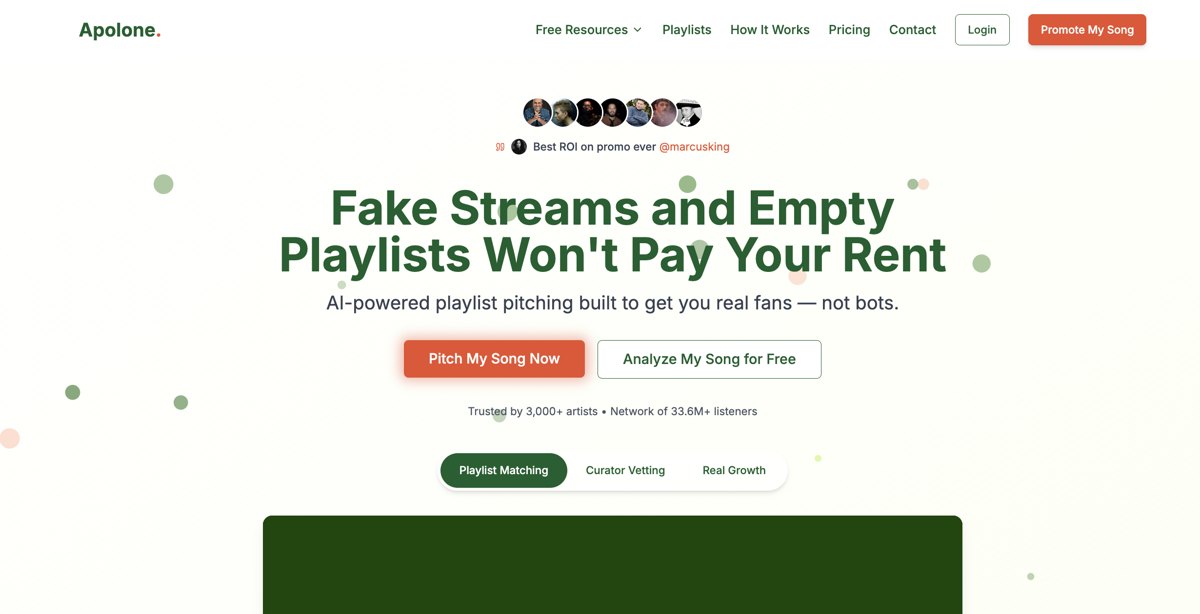
Apolone helps independent artists get real playlist placements with AI-powered pitching. We scaled it on TikTok — building the pixel-event foundation first, moving from manual lookalikes to Smart+, and finding the copy change that dropped cost per purchase 30%.
$30KAd spend managed over 3 months
$70Cost per purchase (CPA)
30%Lower CPA from a single copy test
The challenge
Apolone runs AI-powered playlist promotion for independent musicians — matching artists' songs to real playlists and curators, with a free song analyzer as the top-of-funnel hook and a $39/mo plan. The audience is musicians, which makes TikTok a natural fit: it's where artists already spend their time and discover tools.
But the account was starting close to zero. It was a brand-new TikTok ad account, and while the pixel was installed by the client's developer, the conversion events were never configured. That's the single most common reason TikTok campaigns underperform: the algorithm is asked to optimize for purchases, but it has no clean purchase signal to learn from. Before spending meaningfully, the measurement foundation had to be built.
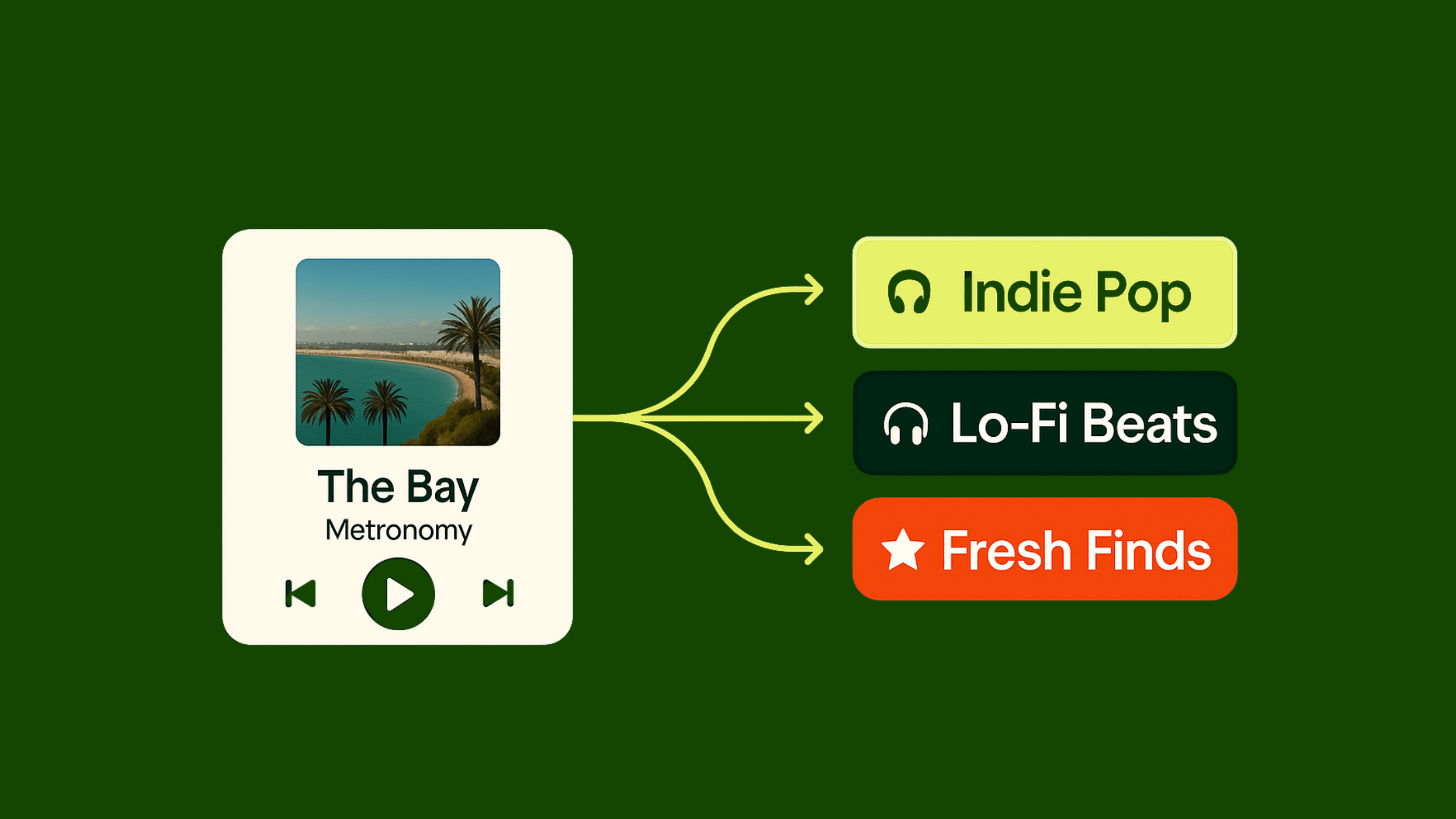
Apolone pitches artists to real playlist curators, not bots — the promise our TikTok creative leaned into.
The strategy
Step 1 — Fix the measurement before spending
We mapped and configured the full TikTok event funnel in Events Manager: Landing Page View, Lead, Add to Cart, Initiate Checkout, and Purchase — each tied to the right page and trigger in the analyzer flow. On TikTok, Smart+ and any purchase-optimized campaign is only as good as the purchase signal you feed it. Getting this right first is what makes everything downstream work.
Step 2 — Start manual with lookalikes to gather clean data
Rather than hand the algorithm to full automation on day one, we launched with manual campaigns built on lookalike audiences from the customer list. This gathered clean, high-intent purchase data at a controlled cost — the fuel the algorithm needs before it can optimize on its own.
Step 3 — Transition to Smart+ once the pixel had signal
Once the pixel had accumulated enough real purchase events, we moved to TikTok Smart+. With a properly trained pixel underneath it, Smart+ could expand targeting and find efficient purchases at scale — something it can't do reliably when it's flying blind. The manual phase earned the right to automate.
Step 4 — A/B test the copy, not just the audience
Most of the efficiency gain didn't come from targeting — it came from one line of copy. We A/B tested messaging variations, and the winner surprised a lot of people: explicitly stating the $39/mo price in the ad increased purchases and cut CPA by 30%. Naming the price up front filtered out low-intent clicks and pulled forward the people who were actually ready to subscribe.
Key insight
On a subscription product, hiding the price to maximize clicks is a trap. Putting "$39/mo" directly in the creative dropped cost per purchase 30% — because the click that costs you money is the one from someone who was never going to pay. Price transparency is a qualifier, not a deterrent.
Results
$30,000 in ad spend managed over roughly 3 months on TikTok
$70 cost per purchase on a $39/mo subscription, optimized for CPP rather than ROAS
30% CPA reduction from the winning copy test alone
Traffic up 30% as spend scaled and Smart+ expanded reach into new artist audiences
The account went from an unconfigured pixel and no purchase signal to a stable, Smart+-driven acquisition engine — with the biggest single efficiency win coming from a change most teams never test: the copy.
Platforms
TikTok Ads
Frequently asked questions
Should I use TikTok Smart+ or manual campaigns?
Both, in sequence. Start manual with lookalike or interest audiences to gather clean purchase data at a controlled cost. Once your pixel has enough real conversion events, transition to Smart+ so it can expand targeting and find efficient purchases at scale. Smart+ launched before the pixel has signal tends to spend inefficiently.
Why aren't my TikTok ads converting?
Usually missing or misconfigured pixel events. If TikTok optimizes for purchases but the Purchase event isn't firing correctly, the algorithm has no clean signal to learn from. Map and configure the full funnel — Landing Page View, Lead, Add to Cart, Initiate Checkout, Purchase — before scaling budget.
Does putting the price in ad copy help or hurt performance?
For subscription and considered-purchase products, stating the price up front often improves performance. Here, adding "$39/mo" to the copy increased purchases and cut CPA 30% — it filters out low-intent clicks and pulls forward buyers ready to convert. Worth A/B testing rather than defaulting to hiding it.
What's a good CPA for a subscription product on TikTok?
It depends on price and lifetime value. For this $39/mo product, a $70 cost per purchase was efficient — the customer pays back acquisition within the first two months. Target whatever keeps your payback period and LTV:CAC healthy, not an absolute number.