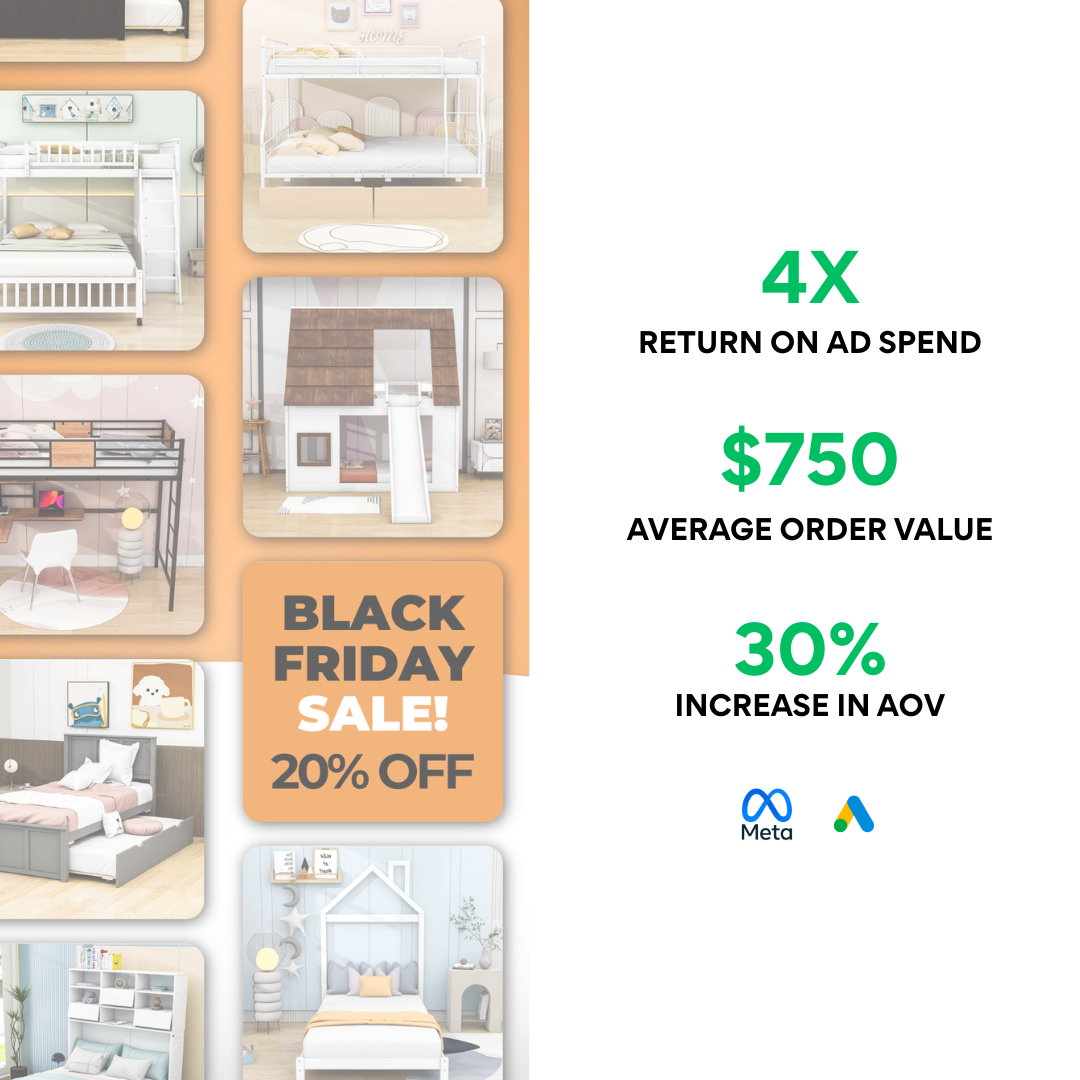
CozyBeds had proven demand on Amazon and Wayfair. They needed to build their own brand and channel — and turn that marketplace success into owned DTC sales.
4xReturn on investment
$500Average order value
The problem
CozyBeds had proven demand — strong sales on Amazon and Wayfair confirmed the product had real buyers. But marketplace success doesn't translate automatically to DTC success. On Amazon, the brand was invisible: no identity, no customer relationship, no email list, no repeat purchase loop. When a customer bought on Wayfair, they became Wayfair's customer, not CozyBeds'.
Building a DTC channel for high-ticket furniture ($500–$2,000 AOV) is fundamentally different from building one for impulse-priced products. Nobody buys a $1,200 bed frame after seeing one Instagram ad. The purchase cycle is long — weeks of consideration, multiple return visits, price comparison with alternatives, and a significant trust requirement before the first conversion.
The challenge was building a brand and a paid media funnel that could support that decision cycle while maintaining strong ROI at a meaningful spend level.
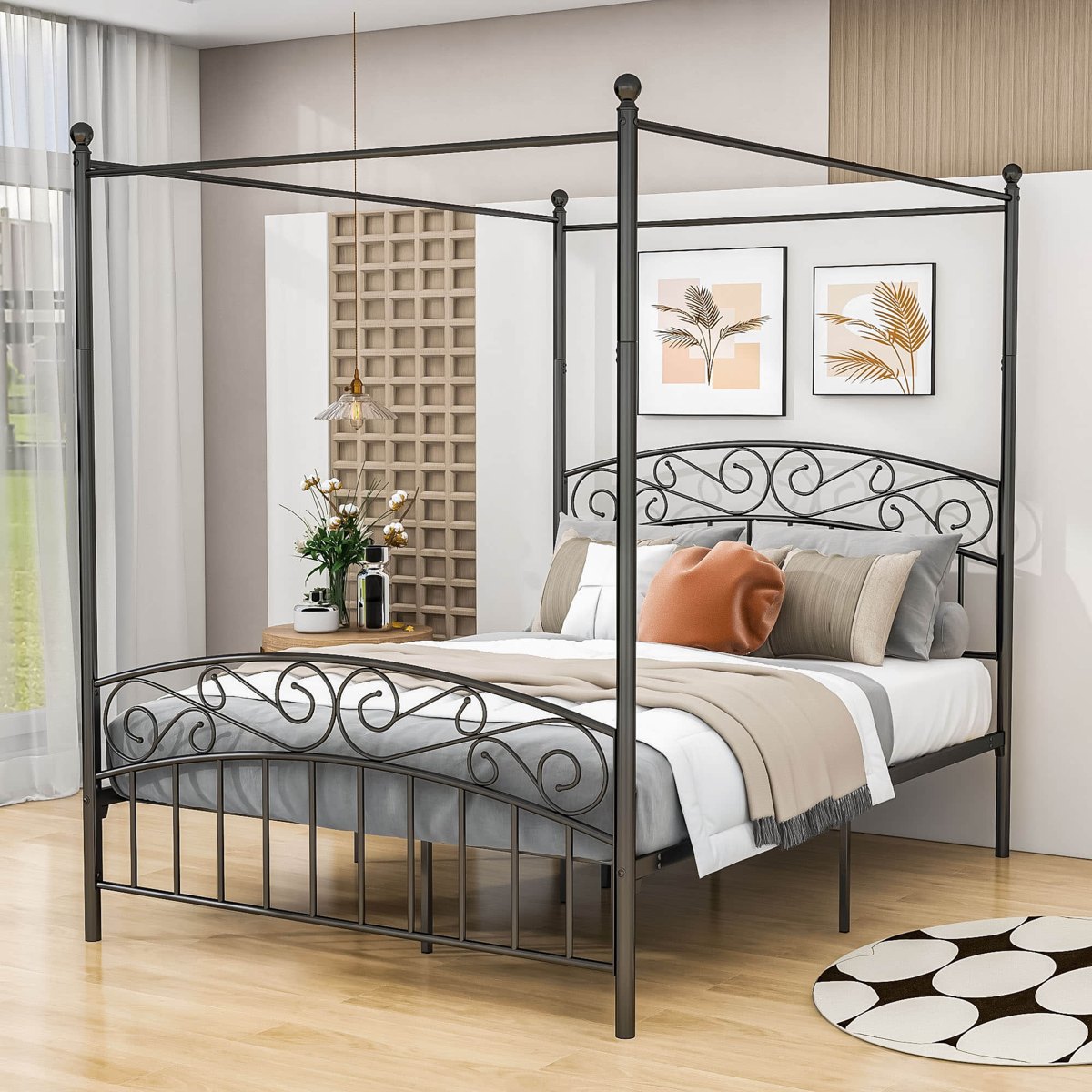
A CozyBeds frame styled in-room — high-ticket furniture where each sale takes real buyer intent.
The strategy
Brand build first, media second
We started with the brand infrastructure — visual identity, website development, conversion rate optimization, and UX improvements to bring the site up to a standard where paid traffic could actually convert. Sending media budget to a weak landing page on a high-ticket product is a reliable way to destroy ROI.
The site was built around the considered-purchase buyer journey: detailed product pages with room lifestyle imagery, material and quality callouts, comparison guides against marketplace alternatives, and a clear trust architecture (reviews, warranty information, return policy) surfaced early in the browse experience.
Full-funnel paid media for a long consideration cycle
At $500–$2,000 AOV, a single-touch acquisition funnel doesn't work. We built a three-stage paid media approach: awareness content at the top to introduce the brand and product range to cold audiences, consideration content in the middle to capture returning visitors and comparison shoppers, and conversion-focused retargeting for cart abandoners and high-intent product viewers.
Each stage had distinct creative: lifestyle and room-in-context imagery at the awareness stage, product detail and quality comparison content for consideration, and direct response with urgency signals for retargeting.
Catalog and SKU prioritization
Shopify inventory analysis identified the highest-margin, fastest-moving SKUs. Ad spend was prioritized toward the products where conversion was most reliable and margin supported the media cost — not spread evenly across the catalog. This kept ROAS sustainable while the brand built momentum.
Multi-channel coverage across the purchase journey
Meta for broad prospecting and visual storytelling. Pinterest to capture buyers in planning and home improvement discovery mode — a high-intent channel for furniture that is chronically underutilized. Google for intent-based search traffic. Email to nurture the consideration window and recover abandoned carts. Each channel was assigned a distinct role in the funnel rather than all pointing at immediate conversion.
Key insight
High-ticket DTC brands fail at paid media when they treat the funnel like an impulse product funnel. A $1,200 furniture purchase requires 5–15 touchpoints before conversion. The paid media job at the top of the funnel isn't to close the sale — it's to introduce the brand credibly and get the buyer into a remarketing window. Brands that measure top-of-funnel spend by immediate ROAS will always underfund awareness and wonder why retargeting costs keep rising.
Results
4x return on investment across the full campaign period
$12.7K in sales generated within the first 30 days of full campaign launch
$500 average order value maintained — no discounting required to drive conversions
DTC channel established as a primary revenue source independent of Amazon and Wayfair
Email list and owned audience built for the first time — repeat purchase and referral capability created
Platforms
MetaPinterestGoogle AdsEmail
Frequently asked questions
What paid media channels work best for high-ticket DTC furniture brands?
Meta for prospecting and visual storytelling, Pinterest for high-intent home improvement discovery, Google for search-intent capture, and email for nurturing the long consideration cycle. Furniture buyers research extensively — a multi-channel approach that keeps the brand visible across the 2–4 week consideration window consistently outperforms single-channel approaches pushing for immediate conversion.
How do you achieve good ROAS on a $500+ average order value product?
Separate your funnel by stage and measure each stage against appropriate metrics. Top-of-funnel spend shouldn't be judged by immediate ROAS — it builds the remarketing audience that makes retargeting ROI possible. Brands that cut awareness because it doesn't immediately convert end up with a shrinking retargeting pool and rising blended CPA.
Should high-ticket DTC brands use Pinterest ads?
Yes — Pinterest is underutilized by furniture brands. Pinterest users are actively in planning mode for home purchases: searching, saving, building mood boards. The intent signal is stronger than Meta because they arrive with a purpose. CPMs are typically lower than Meta for home and furniture categories.
How long does it take to see results from DTC paid media for a new brand?
Budget for 8–12 weeks before drawing strong conclusions. The first 4 weeks build the remarketing pool and generate initial conversion data. By weeks 8–12, you have enough data to make confident decisions about budget allocation and creative direction. CozyBeds generated $12.7K in sales within the first 30 days of full launch.